

Robot Dress-Pack Cables: Torsion vs Drag Chain Constructions
A robot dress pack is the bundle that follows the arm — power, signal, servo and encoder lines moving together through every cycle. It asks two different things of a cable, and they are not the same job. On a rotating axis the cable twists around its own length, turn after turn. In a chain or on a moving gantry it bends back and forth through the same radius, thousands of times a day. A cable built for one motion can fail early in the other: a bending cable forced to twist corkscrews, and a twisting cable bent too tight fatigues at the bend. Our robot cable range covers both duties with two constructions — a torsion cable for the twisting axis, and a drag-chain cable for the bending run — and this guide compares them so the choice is made on motion, not on habit.
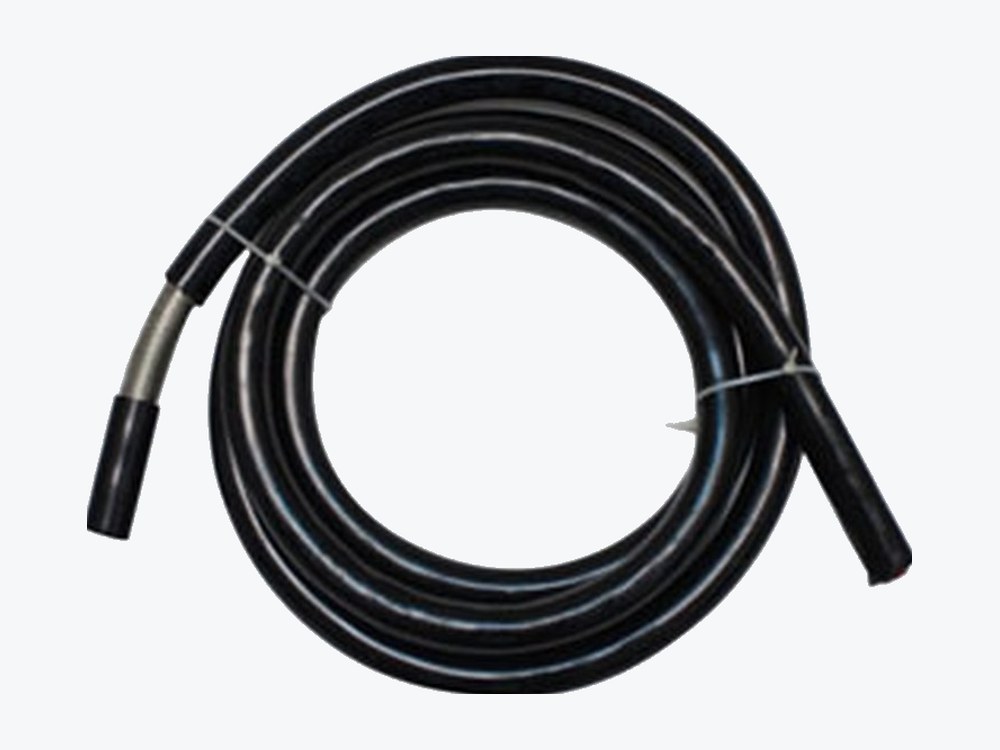
1. The two constructions, side by side
The difference is the motion each construction is built for. The table below uses only product-page values.
| Torsion cable | Drag-chain cable | |
|---|---|---|
| Motion | Twists around its own axis — rated 360° torsion | Bends repeatedly in a chain — bending-life grades |
| Insulation | TPEE or ETFE | Flexible special polymer |
| Jacket | Matt PUR | PUR, glossy or matt |
| Rated voltage | 300 V | 300/500 V, 450/750 V, 600/1000 V by construction |
| Temperature | −40 °C to +90 °C | — |
| Bending life | — | Over 5, 10 or 20 million cycles by grade (factory test conditions) |
| Standard grid | 2–20 cores × 0.14–2.5 mm²; up to 100 cores producible | 2–20 cores × 0.14–2.5 mm²; up to 100 cores producible |
| Selector rows | 684 | 1,020 |
Both constructions share the same conductor idea — fine strands for flexibility — and the same matt-or-gloss PUR jacket family in black, grey, orange or green. What differs is the inside: the torsion cable is built so its cores can rotate around each other without taking a set, while the drag-chain cable is built so its cores survive repeated bending through a fixed radius.
2. The torsion cable: built to twist
The factory manual lists six torsion models, in two insulation families. ETFE twists further — ±270° per model — and TPEE twists ±180° per model. The cable as a whole is rated for 360° torsion, and the bend radius is 10× the outer diameter.
| Model | Insulation / jacket | Shielding | Torsion angle |
|---|---|---|---|
| ROBOT 81900 | ETFE / PUR | None | ±270° |
| ROBOT 81974 | ETFE / PUR | Shielded | ±270° |
| ROBOT 815974 | ETFE / PUR | Shielded twisted pair | ±270° |
| ROBOT 83900 | TPEE / PUR | None | ±180° |
| ROBOT 83974 | TPEE / PUR | Shielded | ±180° |
| ROBOT 835974 | TPEE / PUR | Shielded twisted pair | ±180° |
Conductor: high-purity tinned oxygen-free copper, 0.08/0.1 mm strands. The jacket is matt PUR, and the cable withstands heavy oil exposure, including oil immersion environments. Rated voltage 300 V, ambient temperature −40 °C to +90 °C. The ETFE models are not standard selector rows — they are quoted on enquiry, so send the specification for a price. The TPEE models are the selector-listed torsion series: 684 standard rows (see §4).
One more thing the torsion cable can do: it is not limited to twisting. The factory manual lists these models as usable in drag-chain applications, and the cable also serves in high-speed drag chains. So if the axis both twists and runs in a chain, the torsion construction covers both motions in one cable. See the Robot Torsion Cable for the full construction.
3. The drag-chain cable: built to bend
The drag-chain cable is the bending specialist of the dress pack: a flexible drag-chain cable with PUR jacket options, glossy or matt, made for robot dress packs and frequently moving machine parts. It comes in three bending-life grades — over 5, 10 and 20 million cycles by grade, under factory test conditions.
| Grade | Bending life (factory test conditions) |
|---|---|
| 5 million | Over 5 million bending cycles |
| 10 million | Over 10 million bending cycles |
| 20 million | Over 20 million bending cycles |
Conductor: high-purity oxygen-free copper, 0.08/0.1 mm strands, tinned or bare. Insulation: flexible special polymer. Jacket: PUR, glossy or matt, in black, grey, orange or green. Rated voltage 300/500 V, 450/750 V or 600/1000 V by construction, and shielded versions are available. The selector lists the ROBOT 900P (unshielded) and 900DP (shielded) series — 1,020 standard rows (see §4). A drag-chain cable is a bending cable: it is not built to twist, so do not put it on a rotating axis and expect it to survive — that is the torsion cable’s job. See the Robot Drag Chain Cable for the full construction.
4. The selector: 1,704 standard rows
Every standard robot construction in our selector, recomputed from the selector data. The torsion rows are the TPEE series; the ETFE models are quoted on enquiry and are not selector rows.
| Series | Rows | What it is |
|---|---|---|
| ROBOT 83900 | 144 | Torsion, TPEE, unshielded |
| ROBOT 83973 | 144 | Torsion, TPEE, selector series |
| ROBOT 83974 | 144 | Torsion, TPEE, shielded |
| ROBOT 835973 | 126 | Torsion, TPEE, selector series |
| ROBOT 835974 | 126 | Torsion, TPEE, shielded twisted pair |
| ROBOT 900P | 539 | Drag chain, unshielded |
| ROBOT 900DP | 481 | Drag chain, shielded |
| Total | 1,704 | — |
Seven real selector rows — stock code, model, construction, outer diameter and weight:
| Stock code | Model | Construction | Outer dia. | Weight |
|---|---|---|---|---|
| V101090001402 | ROBOT 83900 | 0.14×2C | 4.1 mm | 24 kg/km |
| V101090001410 | ROBOT 83900 | 0.14×10C | 6.3 mm | 59 kg/km |
| V101110005002 | ROBOT 83974 | 0.5×2C | 6.1 mm | 54 kg/km |
| V101110005010 | ROBOT 83974 | 0.5×10C | 9.9 mm | 162 kg/km |
| V101130001404 | ROBOT 835974 | 0.14×2C×4 | 6.8 mm | 67 kg/km |
| V101010001410 | ROBOT 900P | 0.14×10C | 6.9 mm | 81 kg/km |
| V101020001410 | ROBOT 900DP | 0.14×10C | 7.4 mm | 109 kg/km |
Read the shielded rows against their unshielded neighbours: the 900DP 0.14×10C row runs wider and heavier than the same-construction 900P row, because the shield sits inside the same profile. The 835974 row shows the twisted-pair form — 2C×4 means four twisted pairs — which is the shielded-pair construction for signal cores inside the torsion cable.
5. How to choose: five questions
- Does the axis rotate? If the cable twists around its own axis, pick the torsion construction. The drag-chain cable is not built to twist.
- Does it only bend? If the run only bends in a chain, the drag-chain cable in the right bending-life grade is the pick.
- Both? If the axis twists and the run sits in a chain, use the torsion cable — it also serves in high-speed drag chains.
- Shielding? Servo power and signal ride in the same pack, so a shielded (…74) or shielded twisted-pair (…5974) version keeps feedback clean. Encoder lines ride alongside — see below.
- What travels with it? The dress pack also carries servo power and encoder feedback. Our Servo Motor Cable covers power plus brake pair with shielding; encoder lines are made to drawing.
6. What to send for a quote
- Axis motion: twist angle and direction, or bend radius and travel — this decides torsion vs drag chain.
- Travel and speed: how far the axis moves and how fast, so the bending-life grade can be confirmed.
- Cores and cross-sections: how many cores, and what each carries — power, signal, servo, encoder.
- Shielding: unshielded, shielded, or shielded twisted pair.
- Jacket and length: matt or glossy PUR, jacket colour, length and quantity. Custom builds start at 300 m.
- Model if known: a model number from the tables above, or a selector stock code — either is enough to start. The cable selector lists every standard row.
- Can one cable handle both torsion and bending?
- Yes — the torsion cable is also rated for high-speed drag chains, so one construction can cover an axis that both twists and runs in a chain. The drag-chain cable only bends: do not use it where the cable has to twist.
- TPEE or ETFE — which torsion insulation?
- TPEE models twist ±180° and are listed in the selector (684 rows). ETFE models twist ±270° and are quoted on enquiry — they are not standard selector rows, so send the specification for a price.
- Which bending-life grade do I need — 5, 10 or 20 million cycles?
- Match the grade to the chain’s duty and expected cycles. The figures are factory test conditions, so send travel, speed and expected cycles and we will confirm the grade.
- Do servo and encoder cables go in the same dress pack?
- Yes. The pack carries servo power, brake and feedback alongside the robot cable. Our servo motor cable covers power plus brake pair with shielding; encoder lines are made to drawing.
- What if my construction is not in the selector?
- Send the axis motion, cores, shielding and length. Custom builds start at 300 m, and we usually quote within one working day.
Send the axis motion, cores and length
Tell us whether the cable twists, bends or both, plus the cores, shielding and length. We will confirm the construction — and the bending-life grade — and usually quote within one working day.
Cable selector WhatsApp Request a quote